
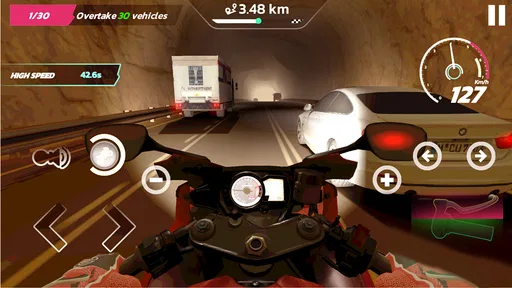
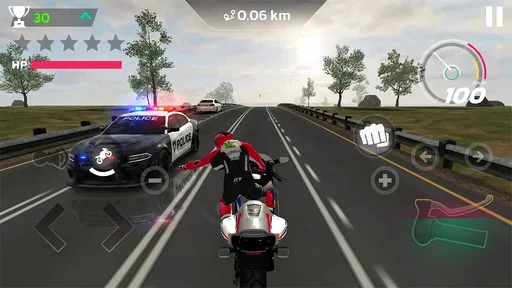
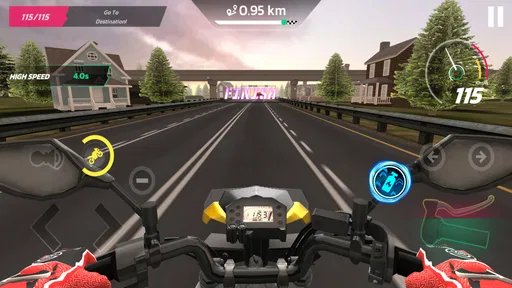
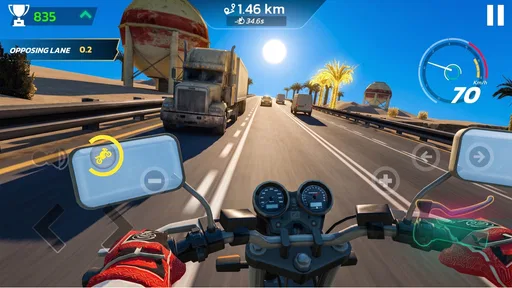
Go Speed: Street Rider review
 Analysis by GetAllApps
Go Speed: Street Rider is best approached as a straightforward racing game for short bursts, not as a deep driving simulator. I like the appeal of that simple premise: when I want a quick change of pace, a street-racing game can be easier to pick up than a long campaign or a complicated sim. But a compact pitch also sets a high bar for the driving itself. The car needs to feel responsive, and each run needs enough variety to make me want another. That is where I would focus when deciding whether this one belongs on your phone.
What the street-racing idea does well
The game is published by SoftAIO and sits in the racing category. Its store tagline points toward speed and street driving, while the short description is simply “Go Speed.” Those phrases suggest an immediate, action-first experience rather than a slow, technical driving lesson. If that is what you want from a mobile racer, the concept is easy to understand without learning a set of specialist terms first.
That simplicity can be a real advantage in everyday use. I can imagine opening it during a short break, playing a little, and putting the phone away without needing to remember a complicated story or a long sequence of objectives. For a quick session, the best mobile racing games make it easy to get from the home screen to the actual driving. I would judge this title by how smoothly it supports that habit, not by whether it imitates a full console racer.
There is also a useful distinction between a street-racing theme and a driving simulator. A simulator is the better fit if you want detailed vehicle behavior, careful practice, and the satisfaction of mastering realistic handling. A street-oriented arcade racer is usually more appealing when the aim is pace and immediate action. Go Speed: Street Rider is positioned toward the latter kind of mood, so I would not choose it expecting a training tool for real-world driving or a finely tuned simulation.
The game is free to download, which makes it relatively easy to try before deciding whether its style suits you. It also includes in-app purchases, with items priced from $0.99 to $19.99. That range is worth keeping in mind if you prefer games where spending is not part of the experience. I would start with the free version and decide whether the game is enjoyable on its own before considering any optional purchase; there is no reason to spend simply because an item is available.
How I would judge the driving, not just the pitch
A racing game lives or dies by the connection between what I do and what happens on screen. For this one, I would pay attention to whether steering feels predictable, whether acceleration and turning are easy to manage on a phone, and whether I can recover from a small mistake. Those details matter more than a dramatic description of speed. If the controls feel awkward in the first few runs, repeated attempts may feel like work rather than a satisfying challenge.
One practical tip is to test the controls before committing to a long session. Try a short run with a light touch, then adjust how firmly and frequently you steer. In mobile racers, overcorrecting can make a car feel less responsive than it really is, while a gentler input can reveal whether the handling is consistent. This is a useful way to distinguish a learning curve from controls that simply do not suit your hands.
I would also use the first session to notice what keeps each race engaging. Does the route or challenge ask me to make different decisions, or do I feel as though I am repeating the same motions? That question is especially important for a game built around quick play. A short race can be entertaining even without a large feature set, but repetition becomes more obvious when every session follows the same rhythm. The answer will help you decide whether the game works as a casual time-filler or whether you need a racer with more variety.
For people who play on the move, another useful test is whether a run still feels worthwhile when you only have a few minutes. A good quick-session game lets me enjoy a contained attempt rather than making a brief interruption feel like a wasted start. I would try it during a natural pause in the day instead of setting aside a long evening at first. That gives you a fair sense of its pick-up-and-play appeal without assuming it offers a lengthy campaign.
Where the compromises matter
The clearest limitation is that the game’s broad, speed-focused framing does not tell me what kind of long-term depth to expect. If you want a defined career, elaborate car tuning, a large selection of modes, or highly realistic driving physics, you should verify that those are actually present in the version you plan to play rather than assume they come with the street-racing theme. I would not buy into the idea of a full simulator here; a more specialized racing title is the safer choice for that expectation.
In-app purchases are another point to consider, particularly for players who dislike prompts to spend while they are trying to relax. The listed item range runs from $0.99 to $19.99, so the optional spending ceiling may feel substantial to someone who wants a strictly no-cost hobby. My practical approach would be to treat purchases as entirely optional and set a personal limit before playing. If a game only feels rewarding after spending, it is probably not the right fit for a player looking for a free, low-pressure racer.
There is a trade-off between accessibility and depth, too. A game that asks little of me can fit neatly into a spare moment, but it may not hold my attention as well as a racer with more demanding mechanics or a stronger sense of progression. That is not automatically a flaw; it depends on what I want from the session. I would skip this style if my main goal were to study car handling, compete in a detailed simulation, or spend hours building a carefully customized vehicle.
The audience rating is Everyone 10+, so parents choosing a game for a younger player should consider that age guidance along with the child’s comfort with racing themes and in-app purchases. Free access is convenient, but it does not remove the need to manage spending on a shared device. I would check purchase settings before handing over a phone, especially if a child can use the store account without supervision.
Who is most likely to enjoy it
I see the strongest fit for players who want a casual mobile racer and are more interested in quick action than realism. It may suit someone who usually plays puzzle or arcade games but wants an occasional change of pace, or a racing fan who wants to test a free title without making a large commitment. With 1M+ installs, it has reached a broad audience, while its average rating is 3.9 from 549 ratings. I would treat those figures as a useful snapshot of interest, not as proof that it will match your personal taste.
A realistic use case is the few minutes while waiting for a ride or taking a break between tasks. I would play one short session, pay attention to whether the controls feel natural, and stop before a quick diversion turns into an unwanted time sink. If I found myself repeating runs because I wanted to improve, that would be a good sign the basic loop was working for me. If I was only replaying because the game offered no clear reason to continue, I would move on rather than force it.
For someone comparing it with the usual alternatives, the key choice is between quick arcade-style driving and structured depth. A dedicated simulator is better for realistic handling and careful practice. A racer centered on long progression is better if collecting vehicles and working through a substantial career is your priority. This game’s street-speed identity makes more sense for someone who wants a lighter, more immediate option, provided its actual controls and repeat play feel satisfying on their device.
Device compatibility is another straightforward check: the current version is 1.0.8 and the minimum operating-system requirement is 7.0. If you are deciding whether an older phone can run it, check the device’s software version before downloading. That small step is more useful than assuming every racing game will work smoothly on every handset, especially if your device is already struggling with newer apps.
A sensible way to try it
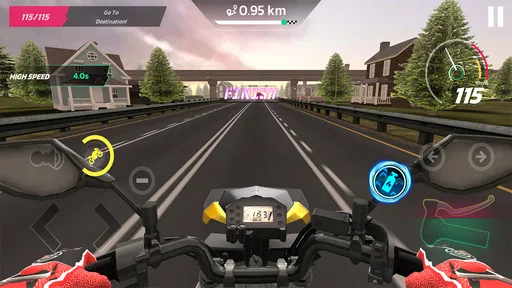
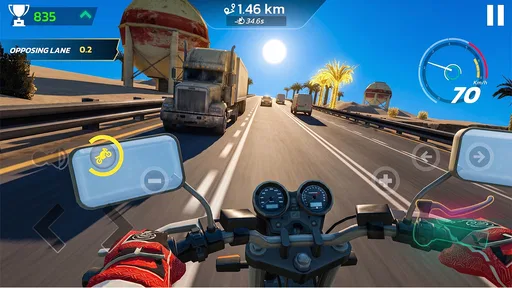
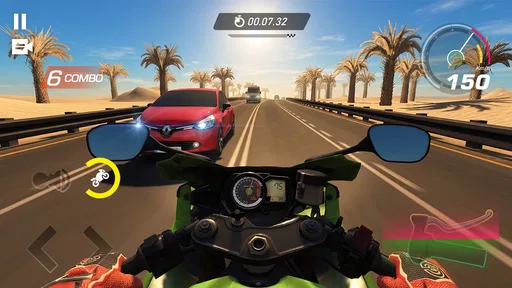
I would begin with a free session and avoid buying anything until I know I enjoy the core driving. During that first run, focus on three things: whether steering responds in a way you can predict, whether the game gives you a reason to try again, and whether the pace suits the length of your usual play breaks. This is a more useful test than judging the game solely by its theme or by how fast the action appears in a screenshot.
If the controls feel imprecise at first, give yourself a few attempts with smaller inputs before deciding. If they remain frustrating, do not assume that more play or a purchase will solve the problem; a different racer may simply suit your touch style better. On the other hand, if you enjoy chasing a cleaner run and the game is easy to enter and leave, it could serve well as a compact diversion. That is the kind of value I would look for here, rather than expecting it to replace a deep racing game.
SoftAIO has released the game as a free racing option, with version 1.0.8 currently available and optional purchases in the app. It has 20 written reviews alongside its ratings, but I would still make my decision through a short personal trial: mobile control preferences are individual, and a rating cannot tell me how a particular game feels in my hands. The age guidance is Everyone 10+, which is another detail worth considering when choosing it for a family device.
My verdict: try it for the right reason
My overall view is cautiously positive for the right player. Go Speed: Street Rider makes most sense as a free, quick-access street racer for people who want an uncomplicated burst of driving action. Its strongest promise is immediacy; its main risk is that a broad speed-focused concept may not provide the depth or variety a more demanding racing fan wants. I would give it a try if you enjoy casual races and are comfortable judging the game on its feel rather than expecting a full simulation.
I would skip it if you need realistic car behavior, a substantial progression structure, or an experience that is guaranteed to stay fresh over long sessions. I would also be careful with optional spending if you want the game to remain a no-cost pastime. For everyone else, the practical recommendation is simple: download it, test the controls in a brief session, and continue only if the driving itself makes you want another run. That is a fair way to find out whether this street racer fits your phone and your habits.
Pros and cons
Pros
- Simple controls make it easy to start riding.
- Short races suit quick gaming sessions.
- The street racing theme gives rides an energetic feel.
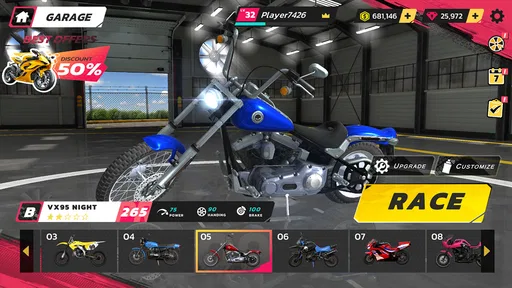
- Vehicle upgrades offer a sense of ongoing progress.
- The game can be enjoyable for casual racing fans.
Cons
- Repeated race formats may feel predictable over time.
- Progress can slow as upgrade costs increase.
- Touch controls may lack precision at high speed.
- Visual details may feel basic on newer devices.
- Frequent play may rely on grinding for upgrades.


